

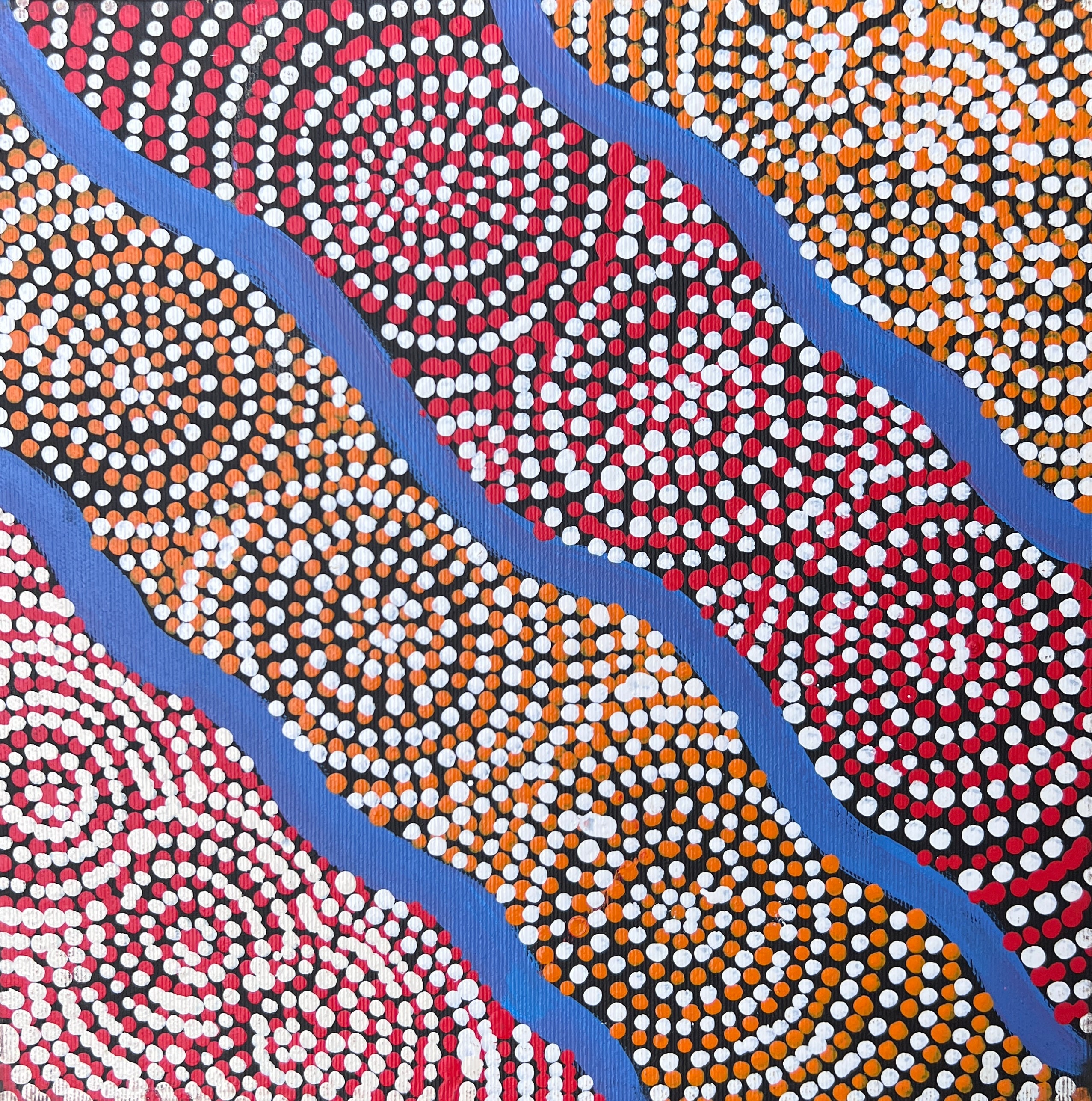
Water Dreaming
30cm x 30cm
Acrylic on canvas
Purchasing your artwork
We have taken great care to ensure that the details, descriptions and prices quoted are correct at the time of publishing.
We have made every effort to render as accurately as possible the colour and design of the products that appear on the website. However, as the actual colours you see will depend on your personal computer equipment, we cannot guarantee that your monitor's display of any colour will accurately reflect the colour of the merchandise on delivery.
Please note that to ensure the safety of your painting, as well as minimizing postage costs, all paintings are dispatched unstretched and rolled. This means that it will require stretching over a frame, prior to being hung. Whilst you can do this yourself, we recommend that a professional framer is used, to ensure that the painting is not damaged.
If this does not suit your requirements, and you wish to purchase a painting pre-stretched, please contact us, nichola@aboriginalcontemporary.com.au to discuss alternative options and prices.
We appreciate that at any price, each painting is an investment and we are happy to answer any questions that you might have.
Certificates of Authenticity
Every artwork comes with a Certificate of Authenticity, issued by the art centre, which includes details of both the artist and the artwork. Different art centres’ certificates look different, however they will all have the following information:
- Artist name
- Information about the artist, such as language group, place of birth, skin name
- Picture of the artwork and in some cases the artist
- Title of the artwork
- Size of the artwork – make sure it matches the actual artwork
- Story – This will vary in length and detail from art centre to art centre and from artist to artist
- Catalogue number - this is an important code that links the artwork back to the artist, art centre and the date it was produced
Shipping & Delivery
Dispatch
We aim to process all orders on the next working day after payment has cleared. You will receive an email confirmation with tracking details after dispatch.
Domestic Orders
Most parcels are sent via Australia Post e-parcel, allowing us to track your orders from placement to delivery. Paintings are normally dispatched unstretched and rolled in a postal tube. Please advise if you would like otherwise.
International Orders
Most international orders are shipped with Australia Post’s e-parcel at a flat rate of $44.50. Paintings are normally dispatched unstretched and rolled in a postal tube. Please advise if you would like otherwise. Certain items, such as large or delicate pieces may require a custom solution. If a shipping cost does not appear at checkout, we will contact you with a quotation, prior to the item being dispatched.
Delivery Times
For standard parcels within Australia, please allow 2-5 working days – larger items may take longer. For international parcels, please allow 11-14 working days, depending on the destination. All orders require a signature upon receipt. Unfortunately, we are unable to redirect orders once items have been dispatched.
Damaged Items
Please check your delivery as soon as possible and advise us of any issues.
Choose options
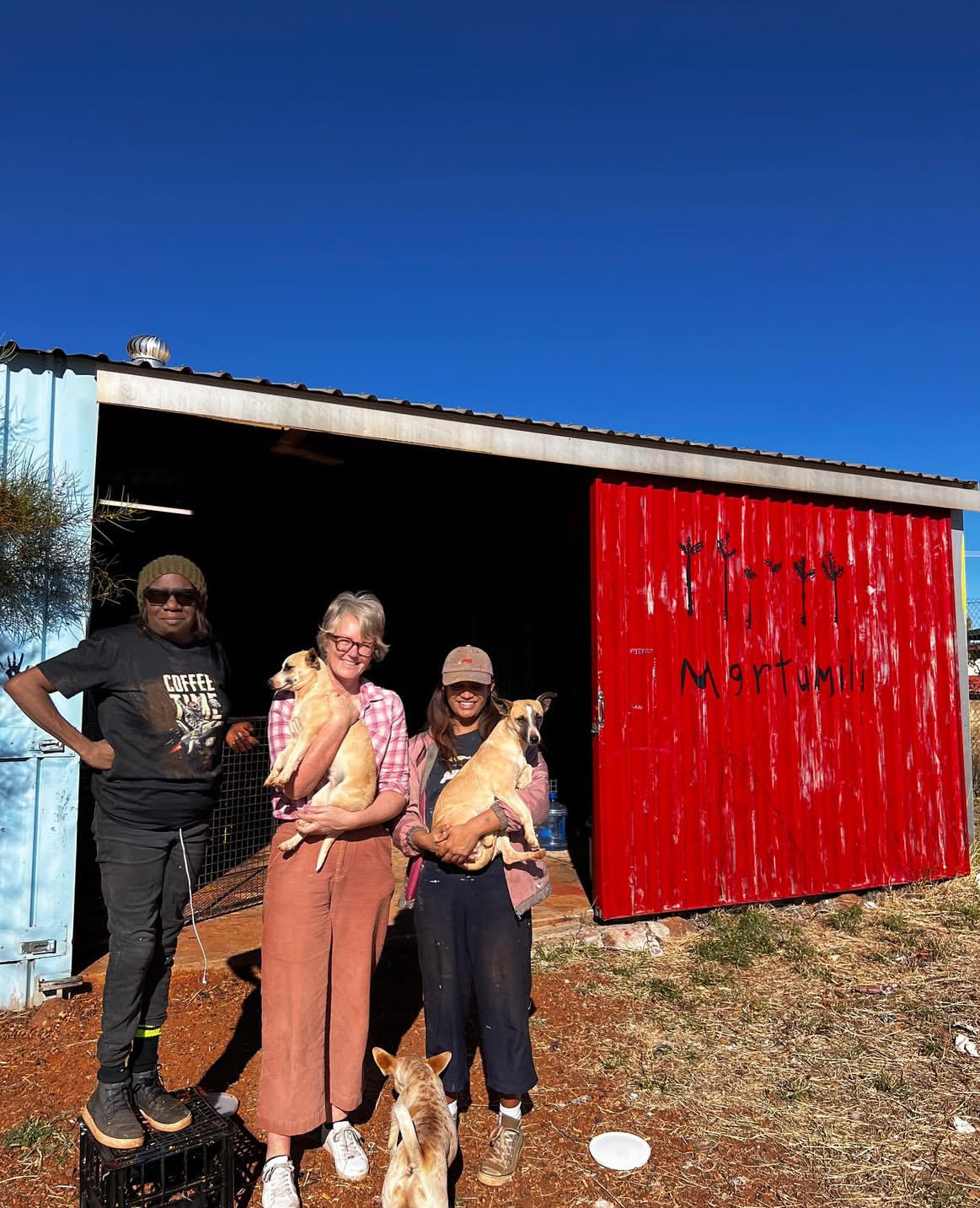
About Aboriginal Contemporary
Aboriginal Contemporary has an enviable reputation for quality, service and ethical trading; not just with our customers but with the art centres from whom we source our work.
This is in no small part due to owner Nichola Dare’s regular trips to some of the most remote parts of Australia and her ability to build relationships with art centres and artists, based on mutual trust and respect. Nichola’s time in Australia’s Western Desert, The Kimberley, APY Lands and Arnhem Land has also given her a deep understanding of the country and culture at the heart of the art we sell.